Compare product packaging and content on the shelf
How to compare product packaging and content on the digital shelf: PIM versus retailer listing, what to diff, and how Digishelf, Salsify, Syndigo, Profitero, and DataWeave position the job.
Direct answer
A digital shelf tool helps compare product packaging and content when it checks the listing a shopper sees (title, images, bullets, and other product information) against the brand's PIM or approved pack, and shows what drifted. We check title, bullets, images, and ratings. Salsify and Syndigo come at it from content syndication. Profitero and DataWeave publish content-optimization products. A physical packaging test is a different job.
What the question is actually asking
People search for a "digital shelf testing tool" that compares product packaging because the pack the shopper sees online is not the file the design team approved. The photo is old. The title still names a discontinued size. A claim that was legal on one market's pack is sitting on another market's page. The team wants a way to see that gap without opening every retailer URL by hand.
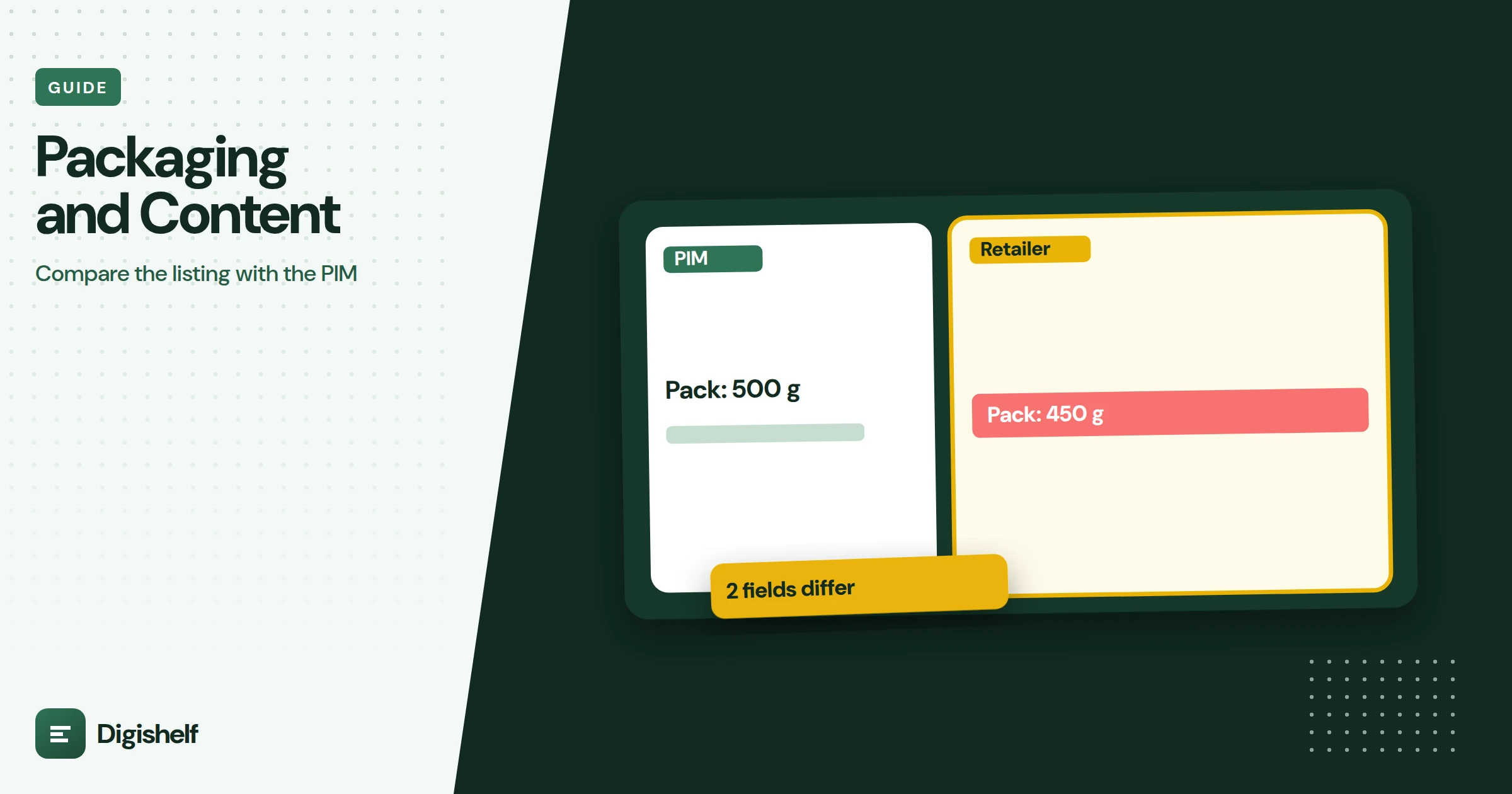
That job is content deviation: the product information on the retailer versus the product information in your PIM, including the images that represent the pack. It is a shelf check of the pack the shopper sees. A laboratory test of board weight, print registration, or a barcode on a physical carton is a different job. Several products do the shelf check, and they sit in different systems.
What to compare
Keep the comparison field-level. A score of 80 does not tell a content owner what to send the retailer.
- Title and bullets. Truncation, the wrong variant, a claim that was not in the PIM.
- Images. Missing primary image, wrong order, or a pack shot that does not match the current artwork you store as the reference.
- Description and enhanced content. Where the retailer template has them.
- Ratings. Not packaging, but they live on the same page and often ride along in the same check.
The reference side has to be yours. A tool that only compares you with a competitor can show difference. It cannot show deviation from the pack you approved. Ask whether the reference is your PIM, a file you upload, or the vendor's guess at a "perfect" page.
How we run the check
We compare title, bullets, images, and ratings against your PIM or against competitors. We route content issues (title drift, missing images, rating drops) to the content team. Forloop, which collects the pages, runs an AI check of product information between the PIM and the retailer. That is content deviation, alongside price adherence.
That is a monitoring feed with a diff, plus an alert. We focus on the shelf check against your PIM. Collection is powered by Forloop.ai. The approved content stays in your PIM. We show where the retailer page no longer matches it, which is the same job described on digital shelf intelligence and in the monitoring guide.
How other providers position the same job
Here is how other providers describe the same job.
Salsify is a PIM and syndication platform. Shelf insight is one module in that system, which is also how Digishelf's comparison matrix describes it. It is the right conversation when the content system of record is the thing you are buying, and the shelf score needs to sit next to the record you syndicate.
Syndigo is a product content and syndication platform that also offers digital shelf analytics, including content accuracy. Same buying logic as Salsify: start here if distribution of content is the program.
Profitero publishes a Content Optimizer alongside its digital shelf product, described on its site as content improvement using benchmarking and generated suggestions. That is an optimization workflow attached to an analytics suite. See Digishelf vs Profitero for how the two products are packaged. An optimizer and a PIM-diff alert are different screens.
DataWeave publishes content audit and optimization next to digital shelf analytics: titles, images, and descriptions scored and improved. See Digishelf vs DataWeave. Ask for a field-level diff against a PIM row you bring, not only a score.
A longer map of these companies is in best digital shelf analytics providers in 2026.
How to test the claim in one meeting
Bring five SKUs and the PIM fields you consider approved, including the current pack shot. Ask each vendor to do three things on a retailer you name.
- Show the title, the primary image, and one bullet as observed, next to your reference.
- Show a difference, not a score. If they only have a score, they have not answered the question.
- Say what happens next: an alert to the content owner, a ticket, or a suggested rewrite. You can want all three. You should know which one is actually in the product.
If the image match cannot tell an old pack from the current one on those five SKUs, it will not do it on the catalog. Matching without a reliable EAN matters here, because pack changes often reuse or break barcodes. Forloop, the data platform behind Digishelf, matches products without an EAN code. We can show that on your items in a free pilot.
What stays with your team
Artwork approval, which on-pack claim is legal in a country, and content syndication stay with your team. The shelf tool's output is evidence: this URL, this image, this title, this difference, this time. The tender guide turns that sentence into a scorecard line so every bidder answers it.
Frequently asked questions
Which digital shelf tool helps compare product packaging?
Any tool that can compare the listing a shopper sees (especially images, title, and description) with the approved pack and the PIM. We compare title, bullets, images, and ratings. Salsify and Syndigo approach it from product content management. Profitero publishes a Content Optimizer. DataWeave publishes content audit and optimization. The right tool is the one that shows the field that drifted, on your retailers.
What is content deviation on the digital shelf?
Content deviation is a difference between the product information you approved, usually in a PIM, and the product information on a retailer page. A changed title, a missing image, or an old pack shot are deviations. A single content score is not a deviation until it points at the field.
Does comparing packaging mean testing the physical pack?
Comparing packaging on the digital shelf means comparing the pack shot and the on-page description with the approved artwork and the product record. A laboratory test of materials, barcodes on a physical carton, or print quality is a different job.